ATS resume checker for customer success managers.
CSM resumes get screened out over vague account language: "managed customer relationships" instead of the retention number or the renewal/expansion ownership a posting screens for. JobForte cross-references your resume against the actual posting and shows you where that's happening.
Check your resume →What gets missed
The gaps ATS screens flag most on CSM resumes.
- Retention as a number. "Reduced churn" doesn't match a posting screening for a specific figure, but "reduced churn from 12% to 7% annually" does.
- Book of business. Portfolio size, account count, and ARR managed are often true of the work but absent from the resume.
- Renewal vs. expansion. Keeping accounts vs. growing them (upsell, cross-sell) are different skills a posting often names directly.
- Named tools. Salesforce, Gainsight, Zendesk, HubSpot: often used but unnamed on the resume.
- Escalation and cross-functional ownership. Postings that mention partnering with product or support on escalations screen for that language explicitly.
How screening works
Who reads a CSM resume, and in what order.
Customer success applications go through the applicant tracking system first, and it mostly decides whether a recruiter can find you. Searches run on the posting's own terms: net revenue retention, churn, renewals, Gainsight, the customer segment. A resume that describes years of account work without any of those words can sit in the pool without surfacing.
The recruiter reads next and sorts quickly on two questions. First, which kind of CSM role this is: onboarding and adoption, renewals and expansion, or a technical CSM role closer to solutions engineering. Second, whether your book matches: segment (SMB, mid-market, enterprise), account count, and the revenue you managed. A strong enterprise CSM with 12 large accounts and a strong SMB CSM with 300 are both credible, but for different jobs.
The hiring manager reads for how you handle risk. They look for a save, an escalation you ran across product and support, or an expansion you uncovered. The resume that gets through names the metrics for the search, states the book for the recruiter, and tells one account story per bullet for the hiring manager.
Before and after
Three CSM bullets, rewritten against a real requirement.
Each example starts from a requirement as it typically appears in a posting. The experience behind the bullet doesn't change, only how precisely it's described.
The posting asks forTrack record of driving net revenue retention and reducing churn
BeforeManaged relationships with a portfolio of mid-market customers.
AfterManaged a $4.2M book of 55 mid-market accounts at 108% net revenue retention; cut logo churn from 11% to 6% in a year by introducing quarterly business reviews for every account over $50K.
The posting names two metrics. The original bullet gives neither, and without a portfolio size a recruiter can't tell whether this was 5 accounts or 500.
The posting asks forHands-on experience with Gainsight and Salesforce; data-driven account health monitoring
BeforeUsed CRM tools to keep track of customer health.
AfterBuilt Gainsight health scores from product usage and support data, synced to Salesforce, so at-risk accounts surfaced 60 days before renewal instead of in the final month.
"CRM tools" matches neither named platform. The rewrite names both and shows what the health monitoring actually changed.
The posting asks forOwn onboarding and drive time-to-value for new customers
BeforeHelped onboard new customers and answered their questions.
AfterOwned onboarding for 30+ new accounts per quarter; redesigned the kickoff plan and milestone checklist, bringing time to first value from 45 days to 21.
"Helped onboard" undersells ownership, and the posting uses a specific term, time-to-value, that the rewrite measures directly.
Only claim numbers you can defend in an interview. If your team didn't report retention by CSM, an honest description of your book ("about 40 mid-market accounts, mostly annual contracts") still beats no numbers at all.
See it in action
A real analysis for a customer success manager role.
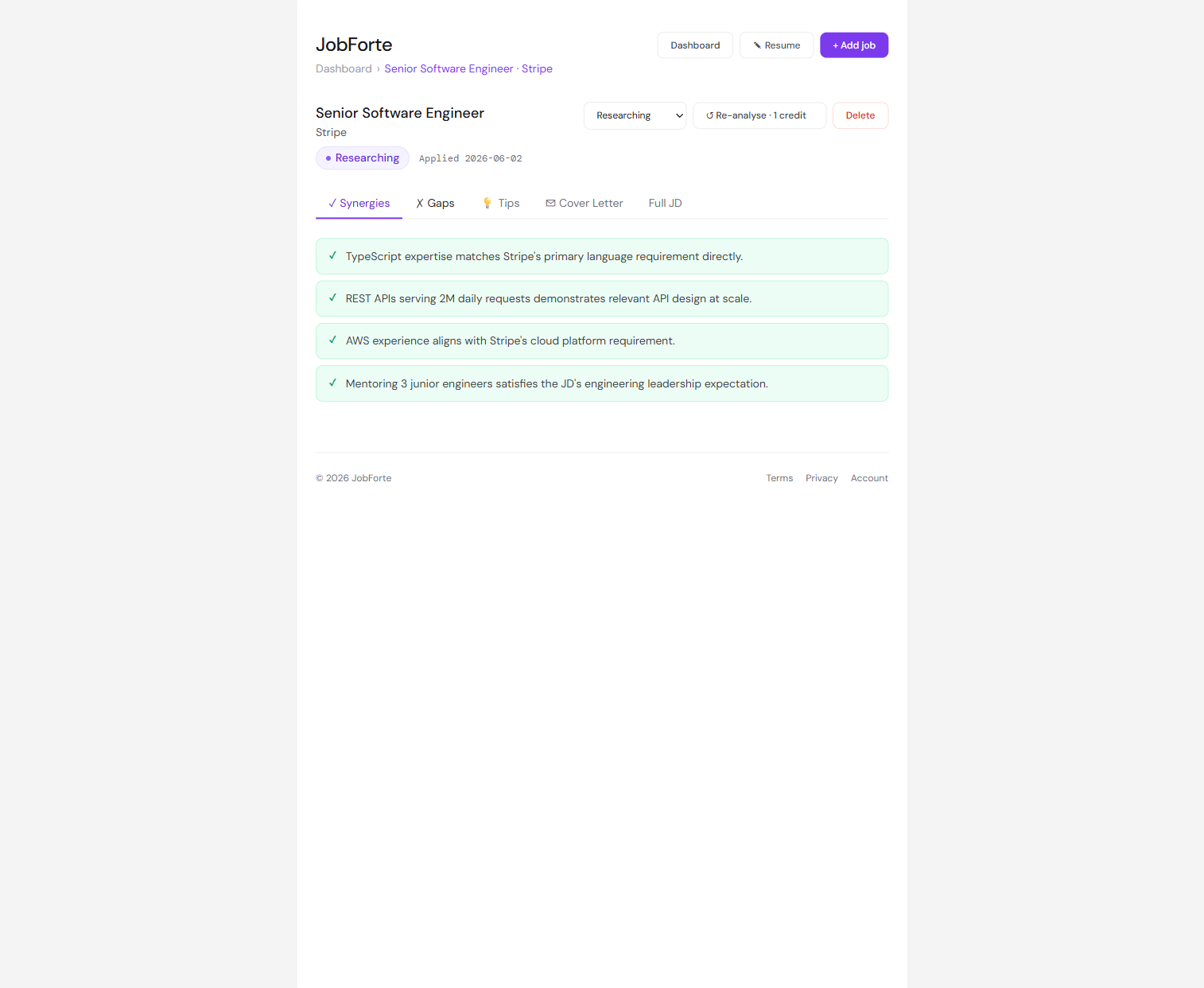
Synergies: where the resume already matches the job description, named specifically.
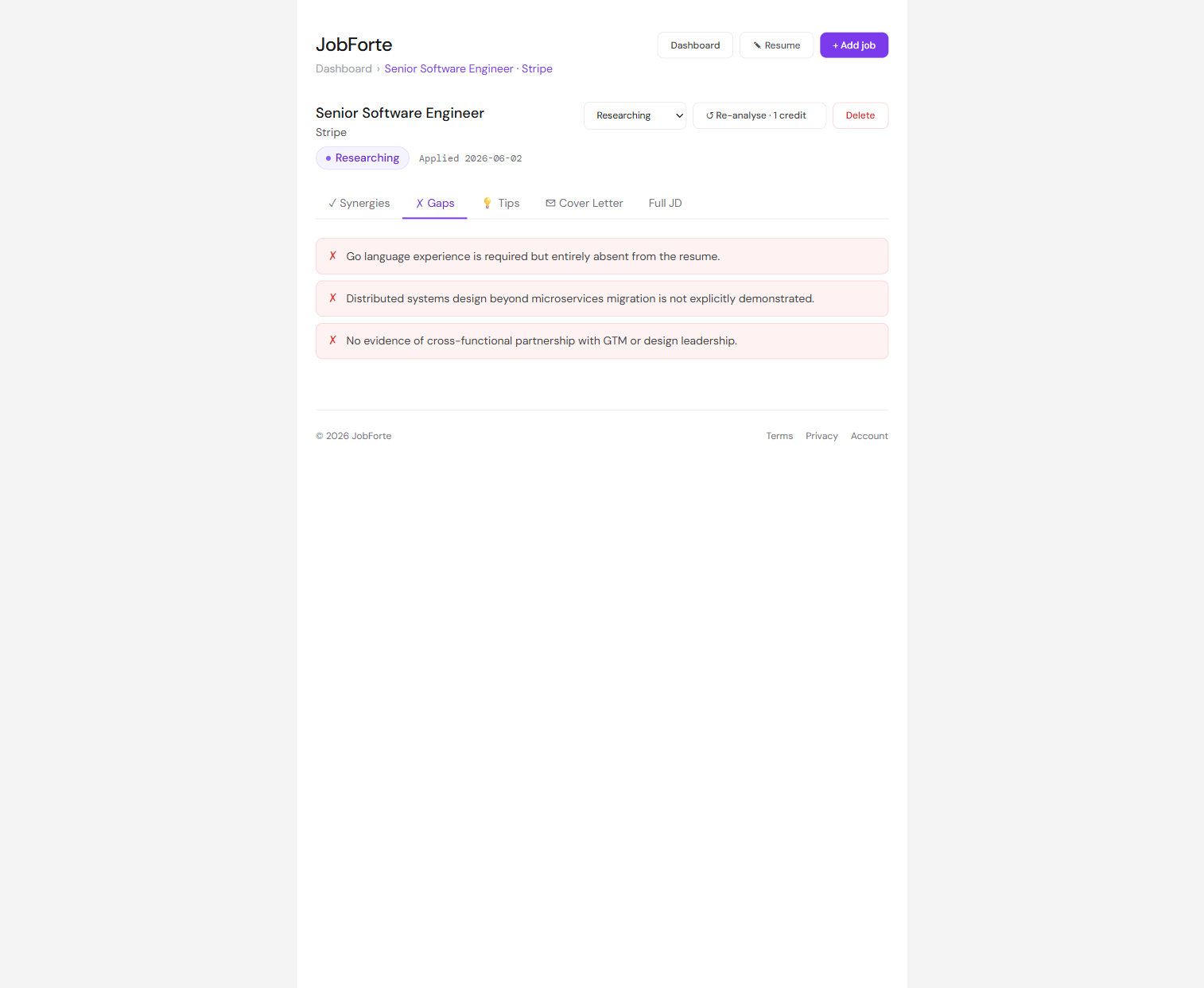
Gaps: what the posting asks for that the resume doesn't reflect yet, split from what's genuinely missing.
Questions
What ATS keywords do customer success manager resumes need?
Screens tend to look for named retention metrics (net revenue retention, churn rate, expansion revenue, NPS), named tools (Salesforce, Gainsight, Zendesk, HubSpot), and explicit ownership of renewals or upsells. A resume that says "managed customer accounts" without a retention or expansion number is the most common gap.
How do I show retention impact if I don't know exact NRR numbers?
A book-of-business framing still transfers: "managed a $3M portfolio of 40 accounts at a 96% renewal rate" screens as strongly as an NRR figure when a posting asks for retention ownership. JobForte flags where a posting screens for a specific retention or expansion metric and your resume describes account management without it.
Does this work for both onboarding-focused and renewal/expansion-focused CSM roles?
Yes. The analysis is generated from the specific job description you paste in, so a posting screening for onboarding time-to-value surfaces different gaps than one screening for upsell and expansion revenue ownership.
How do I move from customer support into customer success on my resume?
Reframe support work around accounts and outcomes rather than tickets. Support resumes tend to lead with volume and speed ("resolved 60 tickets a day"), while CSM postings screen for relationships, adoption, and retention. Pull out the moments that were already customer success work: owning a set of key accounts, running a product walkthrough that reduced repeat contacts, flagging an at-risk customer to sales, or feeding recurring issues back to the product team.
Should I list quota or commercial targets on a CSM resume?
If the role carried one, yes. Some CSM roles own renewal or expansion quota and others are purely relationship and adoption focused, and postings usually say which. When the posting mentions commercial ownership, a line like "carried a $1.2M renewal target, closed at 104%" answers the question directly. If your role had no quota, say what you influenced instead, such as expansion opportunities sourced for account executives.
Other roles
Checking a resume for a different role?
One free credit included · Packs from $3.99 · No subscription