ATS resume checker for registered nurses.
Nursing resumes get screened out over missing specifics: certifications and license status left off, unit type described generically instead of by name. JobForte cross-references your resume against the actual posting and shows you where that's happening.
Check your resume →What gets missed
The gaps ATS screens flag most on RN resumes.
- Certifications and license status. "Certified" doesn't match a posting that screens for "BLS," "ACLS," or a specific compact-license state by name.
- Unit and patient population. "Patient care" reads differently than "ICU" or "med-surg" when a posting screens for a specific unit type.
- Named EHR systems. Epic, Cerner, Meditech: often used daily but unnamed on the resume.
- Quality and safety outcomes. Fall rates, infection rates, patient satisfaction scores: often tracked but absent from the resume.
- Leadership and precepting. Charge duties, preceptor experience, or committee involvement that postings for senior roles screen for explicitly.
How screening works
Who reads a nursing resume, and in what order.
Hospital applications usually start with knockout questions before anyone opens your resume. Do you hold an active RN license in this state, or a multistate license under the Nurse Licensure Compact? Are your BLS and ACLS current? How many years of experience do you have in this specific unit? Are you available for nights, weekends, or rotating shifts? A "no" on a required item can end the application automatically, so answer them accurately and make sure the resume says the same thing.
Next, a nurse recruiter searches and skims. Health systems hire across many units at once, so recruiters filter the applicant pool by unit type, certification, and EHR system. A resume that says "acute care" instead of "cardiac step-down" can miss a search it deserved to appear in.
The nurse manager reads last, for fit with the unit: patient ratios you've handled, acuity, specialty certifications like CCRN or CEN, and whether you've taken charge or precepted. The strongest RN resumes put license and certifications where a recruiter finds them in seconds, then give each role a unit name, a bed count or patient load, and one concrete contribution.
Before and after
Three nursing bullets, rewritten against a real requirement.
Each example starts from a requirement as it typically appears in a posting. The experience behind the bullet doesn't change, only how precisely it's described.
The posting asks forACLS and BLS required; 2+ years of ICU experience; Epic proficiency
BeforeExperienced nurse providing care to critically ill patients.
AfterICU RN, 3 years on a 24-bed medical ICU; BLS and ACLS current; charted in Epic, including titration of vasoactive drips per protocol.
The posting names three screenable requirements. The original bullet matches none of them by name, even though the nurse meets all three.
The posting asks forEmergency department experience; triage using ESI; stroke and sepsis protocols
BeforeWorked in a fast-paced emergency environment and handled a variety of patients.
AfterED RN at a Level II trauma center; triaged 25 to 35 patients per shift using ESI; NIH Stroke Scale certified and first responder on sepsis bundle activations.
"Fast-paced environment" is filler to a screen. Triage method, trauma level, and named protocols are exactly what ED postings filter on.
The posting asks forCharge nurse experience; precepting; participation in quality improvement
BeforeOccasionally took on leadership responsibilities on the unit.
AfterRelief charge nurse on a 32-bed med-surg unit, 2 shifts per week; precepted 6 new-graduate RNs; served on the unit falls-prevention committee.
"Leadership responsibilities" hides three separate things the posting screens for. Naming each one, with scope, makes the match explicit.
Only list certifications that are current, and only claim numbers you can speak to in an interview. If you don't know an exact figure, an honest description of scale ("typical 1:2 ICU assignment") still beats none.
See it in action
A real analysis for a registered nurse role.
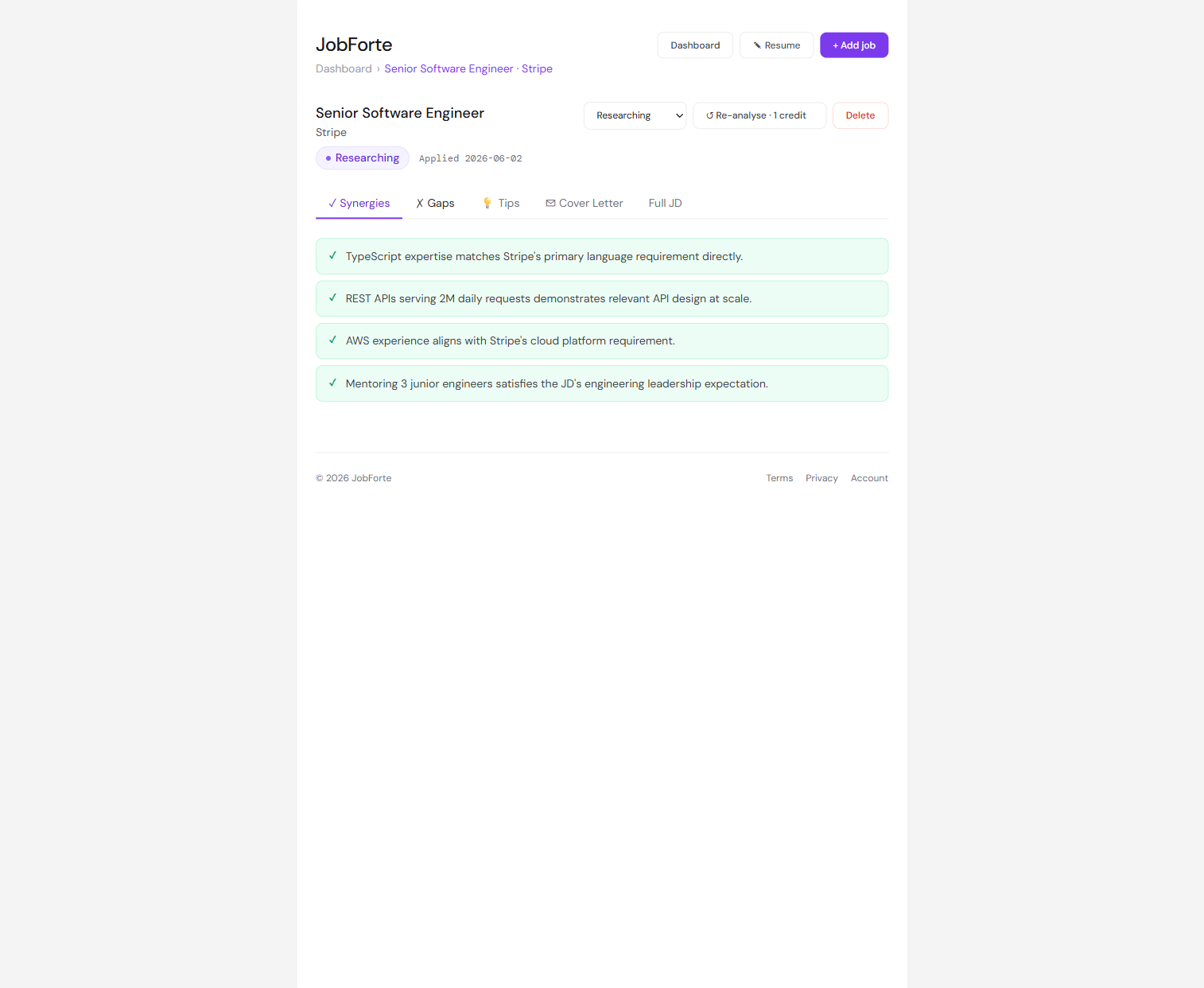
Synergies: where the resume already matches the job description, named specifically.
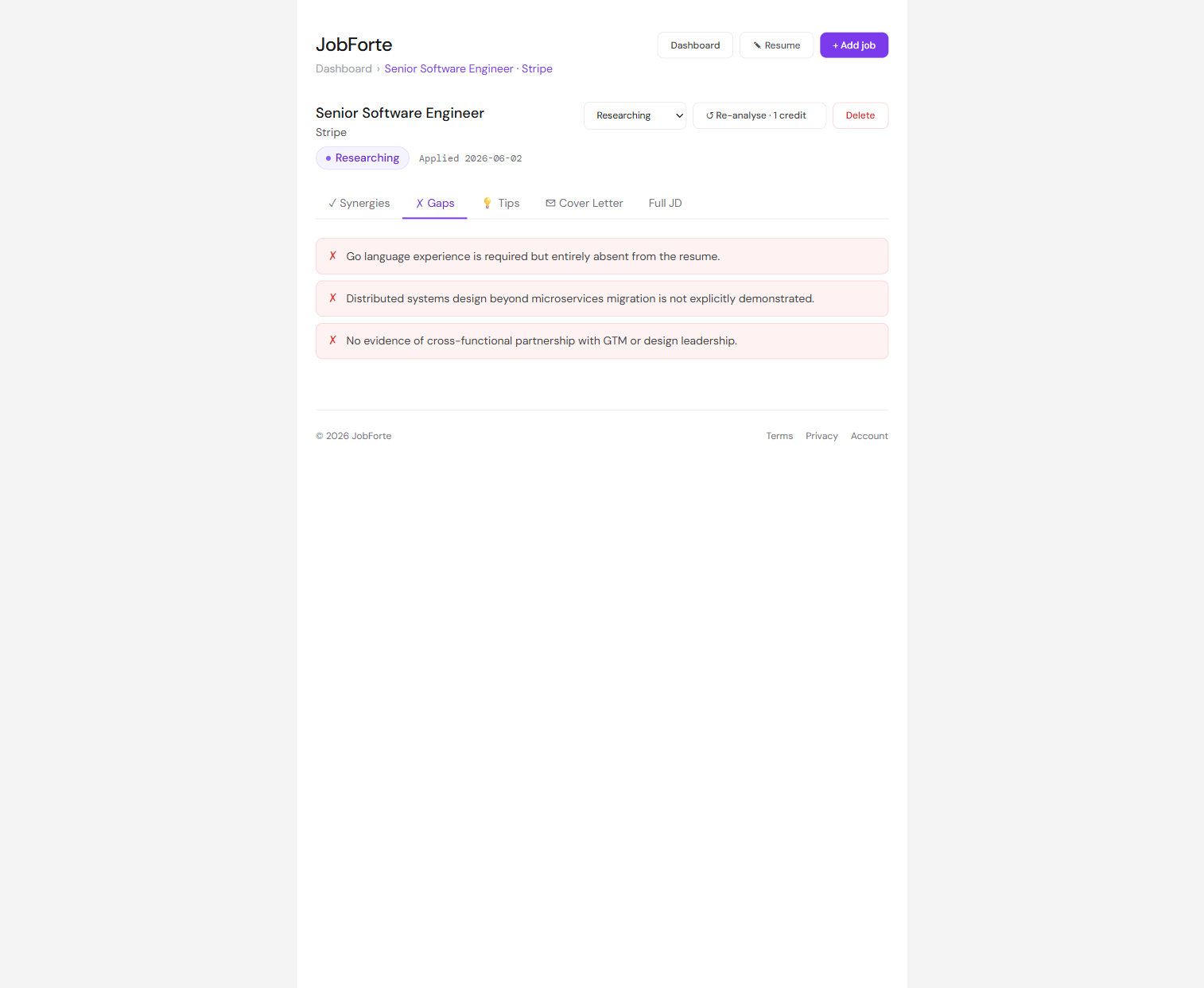
Gaps: what the posting asks for that the resume doesn't reflect yet, split from what's genuinely missing.
Questions
What ATS keywords do registered nurse resumes need?
Screens tend to look for named certifications (BLS, ACLS, PALS, license state and compact status), named EHR systems (Epic, Cerner, Meditech), and the specific unit or patient population (ICU, ED, med-surg, pediatrics). A resume that lists "patient care" without the certification or unit type a posting screens for is the most common gap.
How do I show clinical outcomes on a nursing resume?
Quality and safety metrics transfer well: "maintained a zero-fall rate over 18 months on a 32-bed unit" or "precepted 6 new-graduate nurses" reads more specifically than "provided quality patient care." JobForte flags where a posting screens for a specific outcome or leadership activity and your resume describes duties without it.
Does this work for both bedside and specialty/charge nurse roles?
Yes. The analysis is generated from the specific job description you paste in, so a bedside ICU posting screening for ventilator management surfaces different gaps than a charge nurse posting screening for staffing and preceptor experience.
How should I list my nursing license on a resume?
Give it its own line near the top: "Registered Nurse, [State] Board of Nursing, License #, expires [month/year]." If you hold a multistate license under the Nurse Licensure Compact, say so explicitly, because postings that recruit across state lines often screen for it by name. Don't make a recruiter infer license status from your job titles; many applications ask about it as a knockout question, and the resume should give the same answer.
Can a new graduate nurse get past an ATS without unit experience?
Yes, if the resume leans on what new-graduate postings actually screen for: passing the NCLEX-RN (or your scheduled exam date), BLS, and clinical rotations named by unit and hours ("240-hour capstone preceptorship, cardiac step-down"). Rotations are real unit exposure. Describe them with the same specifics as a job, including patient load and the EHR you charted in.
Other roles
Checking a resume for a different role?
One free credit included · Packs from $3.99 · No subscription